
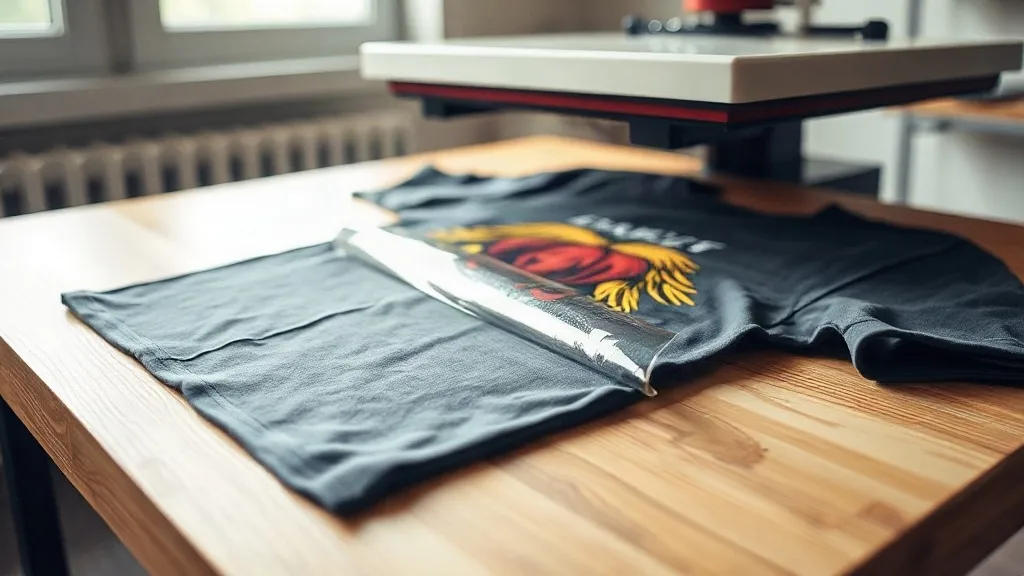
Most people meet dtf transfers at the worst possible moment: a rush order, a deadline, and a heat press already warmed up. The transfer looks fine on the sheet, goes down on the shirt, and then something goes wrong. The edges lift. The colors look muddy against a dark garment. The fine lettering in a logo turns into a soft blur. None of that is bad luck. It is the predictable result of how DTF film behaves, and once you understand that behavior, the whole process becomes far less mysterious.
The goal here is not to sell you on the technology. It is to give you enough working knowledge to judge print quality yourself, ask a supplier the right questions, and stop wasting money on transfers that fail halfway through a job.
What Actually Happens Inside a DTF Transfer
A dtf transfer is a printed film, not a printed garment. Your artwork is printed in reverse onto a coated PET film, a layer of adhesive powder is applied while the ink is still wet, and the powder is cured until it melts into the ink. The result is a flexible sandwich: pigment, adhesive, film. When you press it, the adhesive softens and bonds to the fabric, and the film peels away leaving only the printed layer behind.
That sequence matters because every failure point in DTF traces back to one of those steps. Powder applied too early or too late gives you a transfer that cracks. Under-cured powder washes out in a few cycles. Over-cured powder goes brittle and refuses to stretch with the shirt. A supplier who controls those variables tightly will produce consistent film. One who does not will produce film that works beautifully on Monday and fails on Thursday.
Why the Powder Step Decides Everything
If you ever want to test a supplier quickly, ask how they handle powder application and curing. Vague answers are a warning sign. The adhesive has to sit in a narrow window: enough heat to fuse it into the ink, not so much that it sets before it can bond to fabric later. Shops that run high volume learn this the hard way, usually after a batch of transfers peels in the first wash.
Where Print Quality Actually Breaks Down
Two transfers can look identical on the sheet and behave completely differently after pressing. The differences show up in four places, and all four are worth checking before you commit to a large order.
- Edge definition. Sharp borders on lettering and logos separate a well-calibrated printer from one that is over-inking. Fuzzy edges usually mean too much ink laid down, which also makes the transfer feel thicker.
- Color density on dark fabric. A white ink base is what allows bright colors to sit on black or navy shirts. If the white layer is thin, colors go dull and slightly transparent. If it is too thick, the print feels like a plastic patch.
- Hand feel. Good DTF should drape with the garment. Rub the transfer between your fingers before pressing. If it feels stiff and boardy, it will feel worse on a shirt.
- Stretch and recovery. Press a sample onto a stretchy fabric, let it cool, then pull gently. A quality transfer stretches and returns. A poor one develops hairline cracks at the edges of the design.
None of these require lab equipment. A sample, a heat press, and five minutes will tell you more than any spec sheet.
Matching the Transfer to the Fabric
DTF is often described as working on everything, and broadly speaking that is true. Cotton, polyester, blends, canvas, and even some nylon handle it well. But "works" and "works well" are different standards, and the gaps show up in specific combinations.
On 100% cotton, DTF behaves predictably. The bond is strong, the print sits cleanly, and wash durability is generally solid when the press settings are right. On high-polyester performance fabrics, the story changes. Polyester can repel the adhesive if the surface is treated with a moisture-wicking finish, so a slightly higher press temperature and a longer dwell often help. On stretchy athletic wear, the transfer needs to move with the fabric, which puts more pressure on the quality of the powder layer.
For anyone printing mixed orders, this is the practical takeaway: keep a small library of tested press settings for the fabrics you actually use, and update it whenever you switch suppliers. Reusing old settings with new film is one of the most common causes of avoidable failures.
A Note on Dark Garments
Dark shirts are where DTF earns its reputation and where cheap transfers expose themselves fastest. The white base layer has to be opaque enough to carry color but thin enough to stay flexible. When buyers search for dtf transfers near me, the real question underneath is usually about local quality control: can I see a sample, test it on my own fabric, and get consistent reorders? That is a supply chain question dressed up as a location search.
How to Judge a Supplier Before You Order
Price per sheet is the least useful number in this decision, because a cheap transfer that fails costs far more in reprints, refunds, and lost customers. A better approach is to evaluate suppliers on the things that predict consistency.
- Ask for a physical sample. Any serious supplier will send one. Press it yourself on your own fabric rather than trusting a photo.
- Check turnaround and reorder consistency. If a second order arrives with different color density or a different film thickness, your process breaks. Consistency beats a slightly better first impression.
- Ask about film and powder brands. Suppliers who know their materials will answer directly. Those who do not are usually buying on price alone.
- Test wash durability on a real garment. Wash a pressed sample three or four times before you commit to a bulk order. Most failures appear in that window.
- Look at how they handle gang sheets. If you print small quantities of many designs, layout quality and accurate cutting margins save real money over a year.
A supplier who passes those five checks is worth paying a little more for. A supplier who fails the first one is not worth the discount.
Common Mistakes That Cost Money
The most frequent problem in DTF work is not the transfer itself. It is pressing technique. Insufficient pressure is the classic error: the adhesive needs firm, even contact across the entire design, and a press that is slightly out of calibration will leave edges unattached while the center bonds perfectly.
Peeling too early is the second. Hot peel and cold peel films behave differently, and using the wrong method for the film you bought causes stretched edges and distorted fine detail. The third is skipping the pre-press. Fabric that holds moisture or has a surface finish will resist bonding, and a few seconds of pressing before the transfer goes down solves most of it.
Finally, storage matters more than people expect. Film left in humid conditions absorbs moisture, and moisture is the enemy of the powder layer. Keep transfers sealed and dry, and rotate stock so older film gets used first.
Frequently Asked Questions
How long do DTF transfers last on a washed garment?
With correct pressing and normal care, most quality transfers hold up through dozens of wash cycles. Washing inside out in cold water and avoiding high dryer heat will extend that considerably. Failures in the first few washes almost always point to a pressing or curing problem rather than the film itself.
Can I use DTF transfers on shirts with zippers or seams?
Yes, but the surface has to be flat during pressing. Use a pressing pillow or a folded towel underneath so the design sits level, and avoid pressing directly over hard hardware, which can damage the press platen and distort the transfer.
Is DTF better than vinyl for small orders?
For detailed multicolor artwork, DTF usually wins because there is no weeding and no color layering. For simple single-color shapes in small quantities, cut vinyl can still be faster and cheaper. The right answer depends on design complexity more than order size.
Why does my transfer look faded after pressing?
Faded results usually mean the white ink base is too thin for the fabric, or the press temperature is too low to fully activate the adhesive. Try a slightly higher temperature with a longer dwell on a scrap piece before changing anything else.
Do I need a special press for DTF?
A standard heat press works. What matters is even pressure and accurate temperature, not the brand. A cheap press that reads ten degrees off will cause more problems than an expensive one that is properly calibrated.